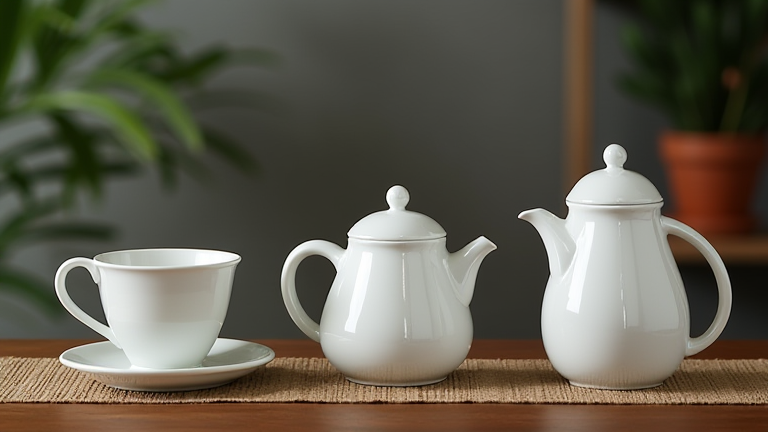
TL;DR: Handmade porcelain teapots are the gold standard for tea brewing because they retain heat evenly, enhance delicate flavors, and double as heirloom art. For the ultimate tea set, prioritize thin-walled, high-fired porcelain with a glazed interior and a well-balanced spout over mass-produced ceramic alternatives.
Why Handmade Porcelain Beats Machine-Made Sets
Unlike factory-stamped stoneware or bone china, handmade porcelain teapots are thrown on a wheel or slab-built, then kiln-fired at 1300°C+. This vitrification process makes the clay non-porous, meaning no lingering tannins or odors from previous brews. The result is a cleaner cup that lets white, green, and oolong teas express their true floral notes. Machine-made sets often use lower-temperature earthenware that absorbs flavors and cracks under thermal shock—a dealbreaker for serious gongfu sessions.
If you want to dig deeper, check out our guide on Elevate Your Home: Timeless Porcelain Teapots for Modern Liv.
Feature Highlights to Look For
When shopping for a handmade porcelain tea set, examine three critical features. First, the **spout design**: a well-drilled, funnel-shaped spout should drip less than one drop after pouring. Second, **wall thickness**—ideal porcelain is 2–3mm, thin enough to feel the heat but thick enough to avoid breakage. Third, the **glaze finish**: a clear, food-safe glaze on the interior (not just the exterior) prevents staining and makes cleaning effortless. Bonus points for a fitted, bamboo-lid ring that creates a gentle vacuum to keep aromas locked in.
Comparison: Porcelain vs. Yixing Clay vs. Glass
Yixing clay teapots are beloved for their seasoning effect, but they absorb flavor and require dedicated pots per tea type—impractical for casual drinkers. Glass teapots look stunning but lose heat 40% faster than porcelain, making multiple infusions inconsistent. Handmade porcelain strikes the perfect balance: it’s chemically inert, heat-retentive (preheated, it holds 90°C for three minutes), and visually versatile—from minimalist celadon to painted cobalt patterns. For a daily-drinker set, porcelain’s durability and neutrality win over both.
Curating the Ultimate Set: What’s Included
Skip the 20-piece decorative boxes. The ultimate handmade porcelain tea set needs only five pieces: a 200–250ml teapot (for 2–3 people), two 60ml tasting cups, one fairness pitcher (gongdao bei), and a shared serving tray. Look for a set where the teapot’s lid fits with a slight “clink” sound—that indicates precision grinding. A good set also includes a knitted or woven cotton cozy (not a plastic one) to retain warmth during slow sessions. Invest in a pot with a built-in stainless steel mesh infuser, but avoid fully glazed interiors if you plan to brew aged pu-erh—those benefit from slight unglazed spots for micro-oxidation.
Call to Action: Elevate Your Ritual Today
Stop brewing in a chipped mug or a thin ceramic tourist trap. A handcrafted porcelain teapot transforms your daily tea from a quick caffeine fix into a meditative ritual. Browse our curated collection of artisan-made sets—each one signed by the potter, fired in small batches, and tested for flow rate. Limited stock of celadon and “kinuta” blue styles available this season. Click “Shop the Guide” to receive a free tea-tasting journal with your first order.
FAQ
Q: Can I use a handmade porcelain teapot on a stovetop or microwave?
A: No. Porcelain is not thermal-shock resistant for direct flame or microwave heating—always preheat with hot water from a kettle before brewing.
Q: How do I clean a porcelain teapot without damaging the glaze?
A: Rinse with warm water immediately after use; use a soft sponge and baking soda for stains. Never use abrasive cleaners or dishwashers, as they
Leave a Reply