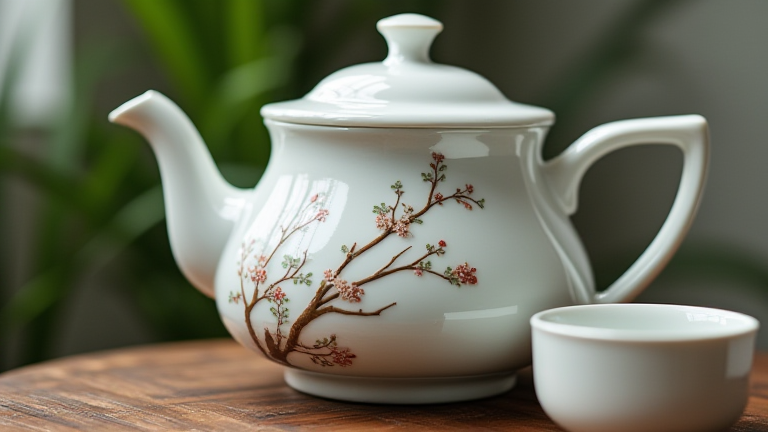
TL;DR: Select a porcelain teapot based on your preferred tea type and brewing volume, ensuring the lid fits snugly to retain heat. Maintain the pot by avoiding sudden temperature shocks and cleaning it immediately after use to prevent staining and preserve the pristine white finish.
Choosing the Right Porcelain Teapot
When selecting a porcelain teapot, consider the material’s unique properties. Porcelain is non-porous, meaning it does not absorb tea flavors or oils. This makes it ideal for light and delicate teas like green, white, or oolong. Unlike clay teapots, porcelain does not alter the taste, allowing the pure aroma of the leaves to shine. Look for a pot with a well-fitting lid; a tight seal is crucial for maintaining the temperature required for optimal steeping. Additionally, choose a spout that pours smoothly without dripping. A straight spout is generally better for light teas, while a curved spout works well for black teas. Ensure the handle is comfortable and stays cool to the touch, as porcelain conducts heat differently than stoneware.
If you want to dig deeper, check out our guide on Top 10 Porcelain Teapots & Sets for Your Perfect Brew.
Care and Maintenance Tips
Proper care ensures your porcelain tea set lasts for decades. Avoid thermal shock by never adding boiling water to a cold pot; pre-warm the vessel with a small amount of hot water first. This prevents cracking and extends the life of the glaze. After each use, rinse the pot with warm water immediately. Do not let tea residue dry out, as it can stain the interior and affect future brews. While porcelain is generally dishwasher safe, hand washing is recommended to preserve the delicate glaze and any hand-painted designs. Use a soft sponge and mild soap. Avoid abrasive scrubbers, which can scratch the surface. If you notice any chips or cracks, discontinue use, as these areas can harbor bacteria and weaken the structure. Store your teapot in a dry place, preferably with the lid slightly ajar to allow air circulation and prevent musty odors.
Brewing Perfect Tea
To brew the perfect cup, start by measuring your tea leaves. A general rule is one teaspoon of loose leaf tea per cup, adjusted to personal preference. Pre-heat the teapot and cups to maintain consistent brewing temperature. Add the dry leaves to the pot and pour in water at the appropriate temperature for your specific tea type. For example, green tea requires water around 175°F, while black tea needs boiling water. Steep for the recommended time, typically two to five minutes. Pour the tea immediately into cups or a serving pitcher to prevent over-steeping, which results in bitterness. Porcelain teapots retain heat well but not as effectively as clay, so monitor the steeping time closely. Enjoy the clarity and brightness that porcelain brings to your tea experience.
FAQ
Q: Can I use porcelain for all types of tea?
A: Yes, porcelain is versatile and works for all teas, though it is particularly recommended for light teas that benefit from a neutral vessel.
Q: How do I remove tea stains from porcelain?
A: Rinse immediately after use. For stubborn stains, soak in a solution of warm water and baking soda for a few hours, then scrub gently.
Q: Is porcelain teapot safe for microwave use?
A: Most porcelain is microwave safe, but check the manufacturer’s label, especially if the set includes metallic accents or intricate gold detailing.
Leave a Reply