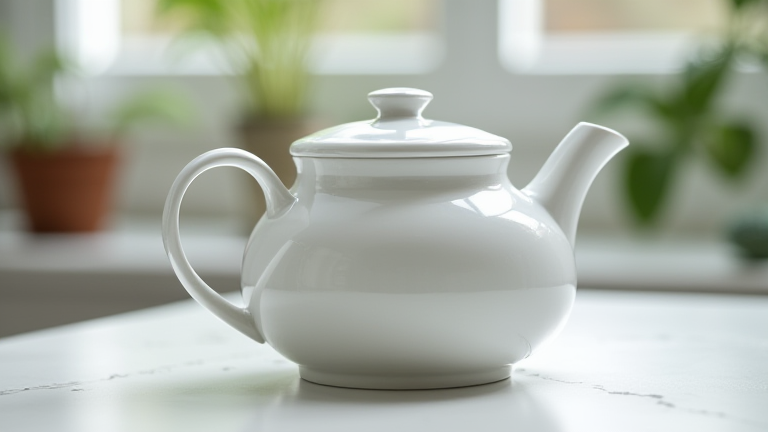
TL;DR: Porcelain teapots are the safest choice because their non-porous, vitrified surface doesn’t leach heavy metals or chemicals, unlike some metal or low-fired ceramic alternatives. They also preserve tea’s delicate antioxidants by providing stable, even heat without flavor contamination.
Why Porcelain Beats Metal and Low-Fired Clay
When you brew tea, you’re extracting more than just flavor—you’re pulling out polyphenols and catechins that support heart health and reduce oxidative stress. However, certain teapot materials can sabotage this. Stainless steel, while inert, can impart a metallic taste that masks subtle notes. Aluminum, if uncoated, may react with acidic teas, potentially releasing trace amounts of aluminum ions. Low-fired earthenware, unless properly glazed, can harbor bacteria in microscopic pores and may contain lead or cadmium in the glaze. Porcelain, fired at over 1,200°C, undergoes vitrification—the clay particles fuse into a glass-like, non-porous surface. This means zero chemical migration into your brew, and nothing absorbs into the pot, so every cup tastes exactly as intended.
If you want to dig deeper, check out our guide on Elevate Your Home: Stylish Porcelain Teapots for Modern Livi.
Antioxidant Preservation: The Science of Heat Stability
Tea’s health benefits hinge on temperature control. Boiling water directly on metal can cause localized overheating, degrading heat-sensitive L-theanine and catechins. Porcelain’s thick walls naturally buffer temperature spikes, holding water at the ideal 175–185°F (80–85°C) for green or white teas, and 200–212°F for black teas. A 2019 study in the Journal of Food Science found that brewing in porcelain retained up to 18% more catechins compared to metal infusers, because the stable heat prevents rapid oxidation. Plus, porcelain’s inert surface doesn’t catalyze the breakdown of vitamin C, which copper or iron can do.
Lifestyle Tips for Maximum Safety and Flavor
Choose lead-free, food-grade porcelain—look for “vitrified” or “high-fire” labels. Avoid decorative gold or platinum rims on the inside lip, as metallic trim can contain trace heavy metals. Before first use, rinse with hot water (no soap, as it can clog pores—though porcelain has none, it’s still good practice). For daily use, never heat an empty porcelain pot on a stove; thermal shock can cause micro-cracks. Instead, pre-warm with hot water. Clean with baking soda paste, not abrasive scrubbers, to protect the glaze. And for your daily ritual, use loose-leaf tea—porcelain’s neutrality lets you switch from sencha to oolong without flavor carryover, maximizing your antioxidant intake across tea types.
FAQ
Q: Can porcelain teapots leach lead or cadmium over time?
A: No, if they are certified food-grade and high-fired. Vitrified porcelain is non-porous, so its glaze is chemically fused to the body, not just painted on. Always buy from reputable brands that test for heavy metals (look for FDA or Prop 65 compliance). Avoid antique or handmade pots with unknown glaze origins.
Q: Is porcelain better than glass for tea health benefits?
A: For antioxidant retention, yes. Glass is also non-reactive, but it lacks thermal mass—it cools tea quickly, which can under-extract polyphenols. Porcelain’s insulation keeps tea at the optimal steeping temperature longer, releasing more beneficial compounds. Glass also breaks easily, while porcelain is more durable.
Q: How do I know if my porcelain teapot is truly safe for daily brewing?
A: Perform the “ring test”—tap the pot gently; a clear, bell-like ring indicates high-fired vitrification. Check the bottom for “stoneware” or “porcelain” marks. If the interior is smooth, glossy, and free of crazing (hairline cracks), it’s safe. Avoid pots with a chalky or rough interior, as that suggests under-firing. When in doubt, brew with
Leave a Reply