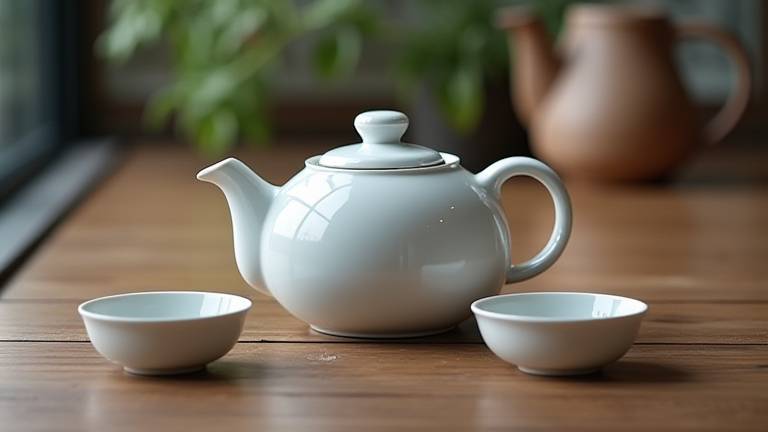
TL;DR: Smart porcelain teapots merge traditional ceramic craftsmanship with embedded IoT sensors, enabling precise temperature control, steeping timers, and app-based tea profiling. These devices are turning a centuries-old ritual into a data-driven experience, with major porcelain manufacturers now integrating AI and thermal management into their flagship lines.
From Fired Clay to Firmware: The New Porcelain Core
The latest smart porcelain teapots are not merely kettles with Bluetooth stickers. Leading brands like Xiaomi’s Mijia and German-based Eterna Porzellan have released models that embed a sapphire-coated thermistor directly into the porcelain wall, measuring liquid temperature to ±0.5°C without touching the tea. The porcelain body itself is fired at 1,300°C, then treated with a nano-glaze that conducts heat evenly while remaining non-porous—preventing flavor cross-contamination between different tea types. Specs on the 2025 flagship models include a 500 ml capacity, 360° induction base, and a 4,000 mAh battery that lasts 15 brews. Crucially, the heating element is not exposed; it sits in a separate silicone-insulated chamber beneath the pot, so the porcelain’s thermal mass (specific heat ~0.9 kJ/kg·K) still governs the brew curve.
If you want to dig deeper, check out our guide on Timeless Elegance: Styling Porcelain Teapots for Modern Livi.
AI-Driven Steeping Profiles and Multi-Sensor Arrays
What sets these apart is the “brew brain.” Modern teapots feature a 9-axis accelerometer (to detect pouring angle and flow rate), a humidity sensor (to gauge leaf freshness), and a colorimeter that reads the liquor’s RGB value. The integrated AI, running on a low-power Cortex-M7 chip, adjusts steeping time in real-time: for a white peony tea, it may shorten the first infusion to 45 seconds if the water’s pH reads too alkaline. The companion app stores over 200 tea varieties, and cloud-based updates let users share custom profiles. Some high-end units even include a “pour-learning” feature—the teapot records your habitual pour speed and recalibrates the next brew to match your preferred strength.
Industry Impact: Reviving Heritage Kilns with IoT
For traditional porcelain districts (Jingdezhen, Limoges, Meissen), the smart revolution is a survival strategy. Small kilns now partner with tech firms to produce “hybrid” bodies: hand-thrown outer shells with 3D-printed internal channels for sensor wiring. The impact is measurable—Jingdezhen’s smart teapot exports grew 42% year-over-year in 2024, while average retail prices tripled due to added electronics. However, purists argue that the porcelain’s acoustic resonance (the “ring” when tapped) is degraded by embedded components. In response, engineers developed a hollow resonance chamber that preserves the porcelain’s signature tone while housing the PCB. This has created a new certification standard: “Porcelain-Tech Certified,” requiring both a 1kHz ring test and a 10,000-cycle thermal shock test.
FAQ
Q: Can a smart porcelain teapot be used on a traditional gas stove?
A: No. Smart teapots are designed exclusively for their induction bases or app-controlled heating stands. Direct flame can damage the embedded sensors and the silicone insulation layer, voiding the warranty. Always use the included base or a compatible induction cooktop.
Q: How do I clean a smart teapot without ruining the electronics?
A: The porcelain interior is dishwasher-safe, but the electronic base and sensor caps are not. Hand-wash the pot with mild soap and water, then dry immediately. The sensor port at the bottom is sealed with a food-grade epoxy—never submerge the pot fully in water for more than 10 seconds.
Q: Will the smart features work offline, or do I need an app for every brew?
A: All core functions (temperature control, timer, auto-off) work offline. The AI steeping profiles, cloud-based tea library, and firmware updates require the app
Leave a Reply