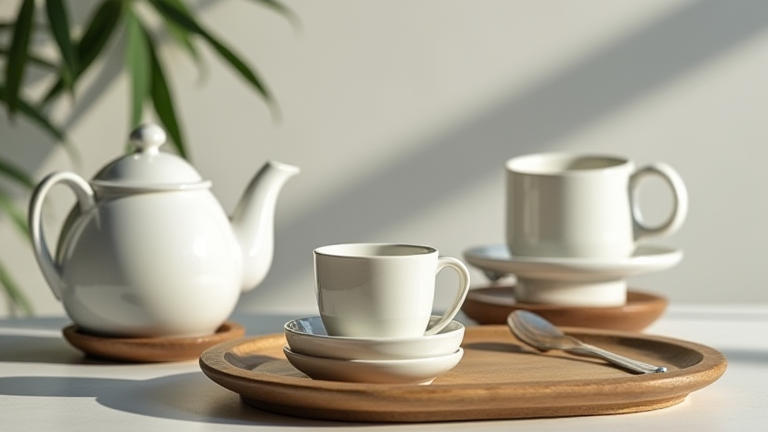
TL;DR: Porcelain teapots don’t just hold tea—they transform it, offering a neutral, heat-retentive canvas that lets delicate leaves express their full aroma and flavor. By integrating porcelain into your daily ritual, you slow down, engage your senses, and turn a quick caffeine fix into a mindful, cultural practice.
Why Porcelain, Why Now?
In a world of stainless steel infusers and microwave mugs, porcelain stands as a quiet rebel. Its origins trace to 7th-century China, where potters discovered that kaolin clay fired at extreme temperatures yields a vitreous, non-porous body. Unlike clay or cast iron, porcelain doesn’t absorb previous brews, nor does it impart metallic or earthy notes. This neutrality is its superpower: a high-mountain oolong or a first-flush Darjeeling tastes exactly as the grower intended, with no ghost of yesterday’s pu-erh. For the modern traveler—whether navigating Kyoto’s teahouses or your own kitchen—porcelain bridges the exotic and the everyday.
If you want to dig deeper, check out our guide on Why the Rebirth of 90s Denim Jackets Is Taking Over Your Fee.
The Tactile Journey of a Better Brew
Holding a hand-thrown porcelain teapot is a lesson in presence. The thin walls warm quickly against your palm, yet the glaze remains smooth, almost silky. As you pour, the spout’s drip-free design forces you to slow your wrist, watching the amber stream arc into a cup. This is not convenience; it’s choreography. The ritual—warming the pot, adding leaves, waiting for the first steep—becomes a form of moving meditation. Studies on mindfulness suggest that repetitive, focused actions lower cortisol. Tea, especially with porcelain’s gentle feedback, offers that pause. You start noticing the steam’s curl, the change in leaf shape, the way the second steep tastes sweeter. That awareness carries into your day, making you more deliberate in conversations, decisions, and rest.
Travel, Culture, and the Porcelain Connection
Porcelain also tells stories of trade and craft. The famed “blue-and-white” patterns you see in antique sets were once the Instagram of the Silk Road, coveted by European royals who couldn’t yet replicate the secret. Owning a porcelain set—even a modern, minimalist one from Jingdezhen or a small studio in Limoges—connects you to that lineage. When you travel, pack a travel-sized porcelain gaiwan. In a hotel room, it becomes your anchor, a piece of home that also honors the local tea you buy from a market in Marrakech or a farm in Sri Lanka. Porcelain doesn’t compete with the destination; it highlights it. The white surface reflects the light of a Moroccan riad, the green of a Vietnamese highland, the gray of a London afternoon. It’s a lens, not a filter.
Curating Your Personal Porcelain Practice
Start small: a single 150ml pot and one cup. Choose a classic white glaze—no busy patterns—so the tea’s liquor color becomes the art. Invest in a lidded cup (a gaiwan) for gongfu-style brewing, which allows many short steeps, perfect for exploring oolongs and whites. Clean your porcelain with warm water only; soap leaves a residue that dulls flavor. Store it unstacked to avoid chips. As you practice, you’ll learn to adjust water temperature by feel—85°C for green, 95°C for black—and time steeps by counting breaths, not using a timer. Over weeks, the pot develops a faint patina of tannins, a diary of your brews. This is not about perfection but about showing up. The art of living with porcelain is, ultimately, the art of paying attention—to heat, to time, to taste, and to yourself.
FAQ
Q: Does porcelain really make tea taste better than glass or ceramic?
A: Yes, for most delicate teas. Porcelain’s non-porous surface and moderate heat retention (better than glass, less than clay) preserve volatile aromatics
Leave a Reply