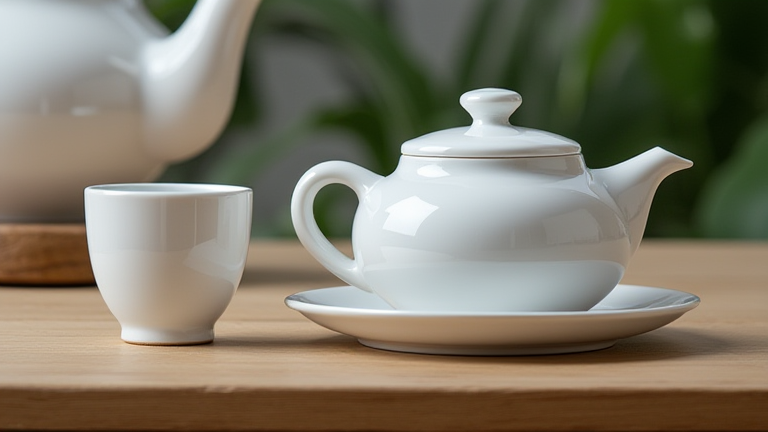
TL;DR: To choose the perfect porcelain teapot set, prioritize fine, translucent porcelain (like bone china) with a snug-fitting lid and a comfortable, balanced handle. Match the set’s size and spout design to your tea type and brewing habits, and always inspect glaze uniformity for durability.
Step 1: Define Your Brewing Ritual
Before browsing, decide how you’ll use the set. Are you a solo daily drinker, a Gongfu ceremony devotee, or a host for afternoon tea? For solo use, a 12–16 oz teapot with a single cup works best. For groups, choose a 24–32 oz pot with 4–6 matching cups. If you brew delicate green or white teas, pick a thinner-walled porcelain that cools faster; for black or oolong, a slightly thicker wall retains heat. Write down your primary tea type—this determines spout shape and filter needs.
If you want to dig deeper, check out our guide on The Porcelain Teapot Trend: Why Vintage Sets Are Back.
Step 2: Assess Porcelain Quality (The “Ring” Test)
High-quality porcelain should be vitrified (glass-like) and non-porous. Gently tap the body of the pot with your fingernail. A clear, high-pitched “ping” that rings for 1–2 seconds indicates dense, well-fired porcelain. A dull, thud-like sound suggests under-firing or impurities. Next, hold the pot up to a light source. True fine porcelain—especially bone china, which contains bone ash—is slightly translucent at the edges. If you see dark spots or uneven thickness, reject that piece. Check the glaze: it should be smooth, glossy, and free of pinholes, crazing (fine cracks), or bubbles, as these trap tannins and odors.
Step 3: Inspect the Lid and Spout Fit
The lid is the most common failure point. Place the lid on the pot without pressing. It should sit perfectly flush with no wobble and have a small vent hole (for air flow) that is cleanly cut. Turn the pot upside down—the lid must not fall off even when tilted 90 degrees. For the spout, look for a sharp, drip-free pour. Fill the pot with water and pour slowly; the stream should be steady and cut off cleanly, not dribble down the side. The spout tip should be slightly lower than the lid rim, preventing overflow when full. If the set includes a built-in mesh filter, ensure it is removable and made of stainless steel or fine ceramic—not plastic.
Step 4: Evaluate Handle Ergonomics and Balance
Hold the empty pot with your dominant hand, as you would when pouring. The handle should feel comfortable for your fingers—loop handles suit small hands, while C-shaped or side handles offer better leverage for larger pots. The handle must be securely attached (no visible gaps or cracks at the joint) and stay cool to the touch when filled with boiling water. Check the balance by filling the pot halfway with water and lifting it: the weight should center over the base, not tilt forward or backward. A poorly balanced pot causes wrist strain and accidental spills.
Step 5: Verify Set Completeness and Versatility
Review what “set” means to you. A full set typically includes: 1 teapot, 4–6 teacups, a sugar bowl, and a creamer. For a minimalist set, you may only need a pot and cups. Inspect every cup’s rim—they should be unglazed? No, they must be fully glazed to avoid chipping. Also, check that cups stack well and have stable bases. Ask the seller if the porcelain is dishwasher and microwave safe. Most fine porcelain is, but metallic accent trims (gold or platinum) are not. If you plan to brew loose leaf, ensure the pot’s strainer holes are small enough (0.5–1 mm) to block fine leaves, or buy a separate infuser basket.
Step 6: Match Aesthetics to Your Home and Ritual
Porcelain comes in three main finishes: white
Leave a Reply