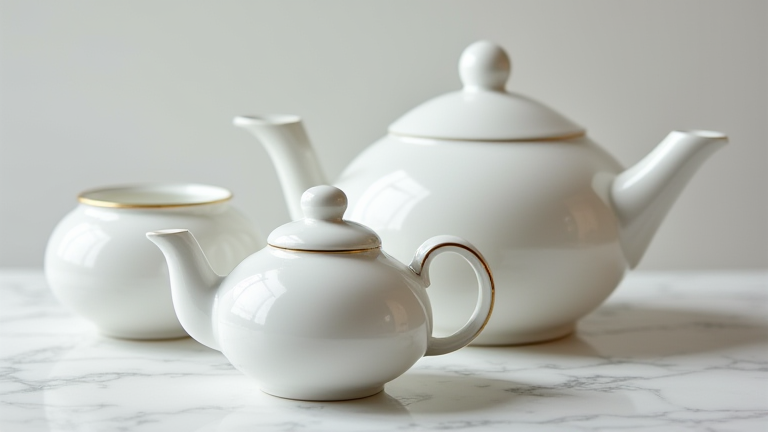
TL;DR: Porcelain teapots are a safe, non-reactive choice for brewing tea because they do not leach heavy metals or alter pH, unlike some metal or low-fired clay pots. Their dense, vitrified surface also resists bacteria and retains heat evenly, supporting both flavor and gentle wellness rituals.
Why Porcelain Is a Health-Safe Brewing Surface
Unlike earthenware or stoneware, true porcelain is fired at extremely high temperatures (above 1,200°C), which vitrifies the clay into a glass-like, non-porous surface. This means no lead, cadmium, or other glaze chemicals can migrate into your hot tea, even with acidic varieties like hibiscus or citrus blends. When buying porcelain, always check for “lead-free” certification or look for reputable brands that use food-safe underglazes. A simple home test: if the inside of the pot is glossy and smooth to the touch, it’s likely vitrified and safe. Avoid hand-painted antique porcelain for daily use, as older glazes may contain lead.
If you want to dig deeper, check out our guide on Best Ergonomic Office Chairs for Back Pain Relief.
Wellness Benefits Beyond Safety
Porcelain’s thermal properties are a hidden health asset. Its moderate heat retention keeps tea at a steady temperature without overcooking delicate leaves, which preserves antioxidants like catechins and L-theanine. These compounds support focus, calm, and metabolism. Furthermore, the neutral surface does not absorb flavors, so you can switch from green to herbal tea without cross-contamination—this is key for those avoiding caffeine or using tea for digestive relief. The weight and warmth of a porcelain pot also encourage slower, mindful sipping, which has been shown to reduce stress markers and improve hydration habits.
Lifestyle Tips for Maximum Benefit
To keep your porcelain teapot hygienic, rinse it with hot water after each use and air-dry upside down. Avoid soap, as porous micro-cracks (even in vitrified porcelain) can trap residues. Once a month, remove tannin stains with a paste of baking soda and water—never scrub with metal brushes. For wellness routines, use a dedicated porcelain pot for herbal infusions (chamomile, peppermint) and another for green tea. This prevents flavor transfer and lets you enjoy the unique calming or energizing effects without interference. Finally, preheat the pot with warm water before brewing; this protects the glaze and ensures your tea reaches its full antioxidant potential.
FAQ
Q: Can porcelain teapots leach harmful substances into boiling water?
A: No, if they are high-fired, lead-free porcelain. The vitrified surface is chemically inert, so even boiling water or acidic teas will not draw out metals. However, avoid cracked or chipped pots, as those can expose raw clay or glaze layers.
Q: Is porcelain better than stainless steel or glass for tea health?
A: For flavor and thermal stability, porcelain is superior to metal (which can impart a metallic taste) and comparable to glass. However, porcelain retains heat longer than glass, which preserves delicate antioxidants better over multiple infusions.
Q: How often should I replace a porcelain teapot for hygiene?
A: With proper care, a quality porcelain teapot can last decades. Replace it if you see crazing (fine cracks in the glaze), as those can harbor bacteria. Otherwise, daily rinsing and monthly deep cleaning keep it safe indefinitely.
Leave a Reply