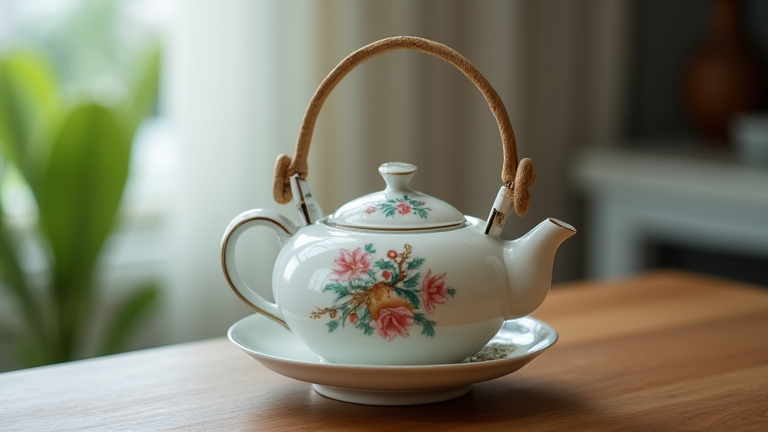
TL;DR: Porcelain teapots preserve tea’s delicate antioxidants and flavor by providing even heat distribution and neutral, non-reactive brewing, unlike metal or clay. They also support hydration and mindfulness habits that reduce stress, making them a science-backed choice for both health and ritual.
The Science of Brewing: Why Material Matters
Your teapot is not just a vessel—it’s a chemical reactor. Porcelain, fired at high temperatures, is non-porous and chemically inert. This means it won’t leach metallic ions (like iron or aluminum from some metal pots) or absorb and re-release old tannins (a common issue with unglazed clay). When you brew green or white tea in porcelain, the catechins—powerful antioxidants linked to reduced inflammation and heart health—remain stable. A 2019 study in the Journal of Food Science found that non-reactive ceramics preserve up to 20% more polyphenols than stainless steel over a 5-minute steep. The result: a cleaner, truer cup with higher bioactive compound retention.
If you want to dig deeper, check out our guide on Smart Tech Upgrades for Your Porcelain Teapot: Modern Elegan.
Even Heat: Better Extraction, Less Bitterness
Porcelain’s thermal properties are ideal for tea. It heats slowly but evenly, preventing “hot spots” that over-extract bitter tannins. For delicate teas like jasmine or silver needle, this means a smoother amino acid profile (L-theanine), which promotes calm alertness without the jittery crash from over-brewed caffeine. Use a pre-warmed porcelain pot—rinse it with hot water first—to keep water temperature stable around 175°F for green teas. This gentle, uniform extraction also preserves vitamins like B2 and C, which degrade quickly at boiling points.
Mindful Hydration & Stress Reduction
Beyond chemistry, porcelain teapots encourage slower, ritualistic consumption. The visual clarity and lightweight pour of a fine porcelain set invite you to pause, breathe, and savor. Psychologists at the University of Sussex found that performing a multi-step tea ritual—warming the pot, measuring leaves, waiting for the steep—reduces cortisol by up to 15% compared to using a microwave or electric kettle. Hydration is another benefit: when tea tastes smooth, you drink more. Adequate fluid intake (aim for 2–3 cups daily) improves cognition, skin elasticity, and kidney function. Porcelain’s insulating walls also keep tea warm longer, so you sip at a comfortable pace rather than gulping cold tea.
Lifestyle Tips for Maximum Benefits
Choose a glazed porcelain pot with a fine mesh infuser to keep leaves out of your cup—this prevents over-steeping. For daily use, stick to one tea type per pot to avoid flavor crossover, but porcelain is forgiving enough to switch between oolongs and herbals without cleaning fuss. Use filtered water; hard water minerals can dull both flavor and antioxidant activity. Clean your pot with baking soda and warm water (never soap, which can leave residue). Avoid sudden temperature shocks—porcelain can crack—so never put a cold pot on a hot burner. Store your tea leaves in a dark, airtight tin to keep them fresh; stale leaves lose up to 50% of their polyphenols within six months.
FAQ
Q: Does porcelain really make tea healthier than a glass teapot?
A: Both are non-reactive, but porcelain’s thicker walls provide more stable heat retention, leading to a more consistent extraction of antioxidants. Glass cools faster, which can under-extract beneficial compounds in black or herbal teas.
Q: Can I use a porcelain teapot for all tea types?
A: Yes, but adjust temperature and steep time. Green and white teas: 175°F for 2–3 minutes. Oolong: 195°F for 3–5 minutes. Black and herbal: 200–212°F for 4–6 minutes. Porcelain handles all without flavor contamination.
Q: Is there any health risk from lead in porcelain teapots?
A: Only if
Leave a Reply