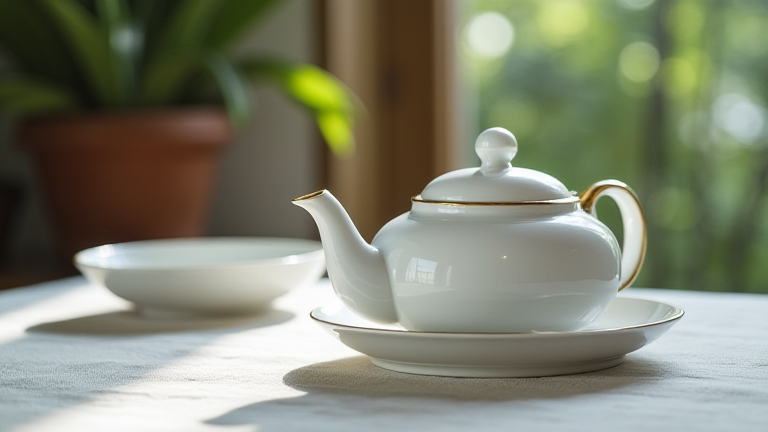
TL;DR: Porcelain teapots are more than brewing vessels—they are a daily ritual of mindfulness and aesthetic grace that slow down modern chaos. Their thermal stability and non-porous glaze deliver a purer, more nuanced tea, making every cup a moment of intentional self-care.
The Art of the Pour: Why Porcelain Matters
In a world of hurried coffee cups and disposable everything, the porcelain teapot stands as a quiet rebellion. Unlike clay or iron, porcelain’s vitrified body does not absorb flavors, meaning each tea—whether a delicate silver needle white or a robust oolong—tastes exactly as the leaf intended. This purity is not just about taste; it’s about honoring the craft of tea growers and the centuries of Chinese, Japanese, and European ceramic traditions. When you lift a porcelain lid, you are not just heating water—you are participating in a lineage of slow living.
Traveling Through Culture, One Cup at a Time
Bringing a porcelain teapot into your home is a passport to global culture without leaving your kitchen. The thin, translucent walls of a Dehua or Jingdezhen pot are a study in patience—fired at over 1300°C, they ring with a clear, bell-like tone. For the traveler, a compact porcelain gaiwan or a small 150ml teapot fits neatly into a backpack, turning a hotel room into a tea house. This is personal growth through ritual: the act of boiling water, warming the pot, and pouring a slow stream forces you to breathe. It is a portable meditation, a way to anchor yourself in any time zone.
Designing a Ritual of Slow Luxury
Beyond function, the porcelain teapot is a sculptural centerpiece. Its glossy, ivory surface catches morning light, while hand-painted cobalt blue or celadon glazes add a touch of museum-worthy elegance to your dining table or bookshelf. Pair it with matching porcelain cups—not mugs—to fully experience the thin lip that delivers tea to your palate with a silky, precise flow. Hosting an afternoon tea becomes an act of curation: choose a floral jasmine, set out a porcelain creamer and sugar bowl, and watch conversation slow as guests admire the craftsmanship. This is not about perfection; it is about presence.
Practical Elegance for Daily Life
Contrary to the myth of fragility, quality porcelain is surprisingly durable—chip-resistant and dishwasher-safe if you choose high-fired pieces. For the busy professional, a porcelain teapot with a built-in stainless steel infuser offers a two-minute escape: steep a single-origin black tea while you plan your day, then pour into a matching cup. The key is to avoid soap with strong scents, as porcelain’s non-porous surface can hold residue. Rinse with hot water, air dry, and your teapot will develop a gentle patina of use—not of stain, but of memory. This is lifestyle elevation: not owning more, but owning better.
FAQ
Q: How do I clean a porcelain teapot without damaging the glaze?
A: Rinse immediately with warm water after use; for stubborn stains, use baking soda paste on a soft sponge—never abrasive scrubbers. Avoid harsh detergents with lemon or bleach, as they can dull the glaze over time.
Q: Can I use a porcelain teapot on a stove or in a microwave?
A: No—porcelain teapots are for brewing with separately boiled water, not direct heat. Microwaving can cause thermal shock and cracking; always preheat the pot with warm water before adding boiling tea.
Q: What is the ideal teapot size for personal use?
A: A 200–300ml (about 7–10 oz) pot is perfect for solo sessions or two small cups. Larger 500ml pots suit gatherings but lose heat faster; choose a thicker-walled porcelain for better insulation if you entertain often.
Leave a Reply