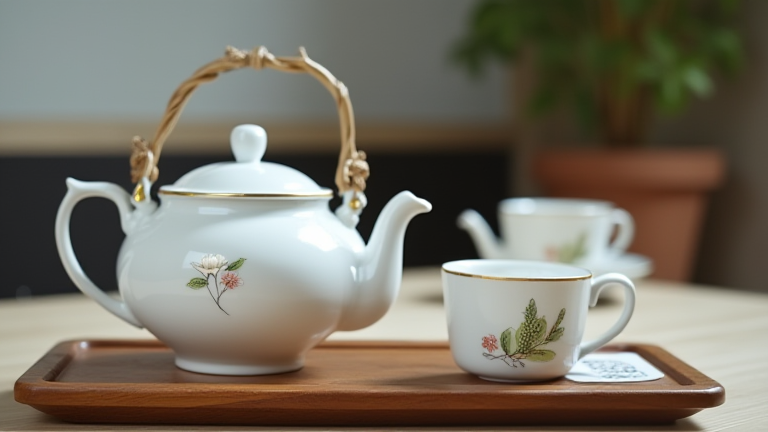
TL;DR: To keep a porcelain teapot pristine, hand-wash with mild soap, avoid thermal shock, and store it with the lid off to prevent odors. For tea sets, always pre-warm the pot and match the tea type to the pot’s glaze to preserve flavor and appearance.
Step 1: First-Time Preparation
Before your first brew, rinse the teapot and all tea set pieces with warm (not boiling) water. Do not use detergent—porcelain is non-porous, so plain water removes dust. Dry completely. To season the pot, brew a cheap, low-grade tea, discard the liquid, and rinse. This opens microscopic pores and prevents your first real brew from tasting “earthy.”
Step 2: Daily Use & Pre-Warming
Porcelain cracks under sudden temperature swings. Always pre-warm the pot by filling it one-third with hot tap water, swirling, and discarding. Then add boiling water. For delicate green or white teas, let boiling water cool to 175–185°F (80–85°C) before pouring—this protects the glaze and the leaf. Place the teapot on a wooden or cork trivet, never a cold metal counter.
Step 3: Brewing and Pouring
Use 1 teaspoon of loose leaf per 6 oz (180 ml) of water. For a full tea set, keep the lid on during steeping to retain heat. Pour slowly, tilting the spout downward to avoid drips. If your set includes a strainer, place it over the cup—porcelain strainers are fine but hand-wash immediately to avoid staining.
Step 4: Cleaning Without Damage
Rinse the pot immediately after use with warm water; do not let tea sit overnight. For stubborn tannin stains, use a paste of baking soda and water, scrubbing with a soft sponge. Avoid abrasive pads, bleach, or dishwasher cycles—the high heat and detergents dull the glaze. If the lid sticks, rub a drop of vegetable oil on the rim.
Step 5: Storage and Set Maintenance
Store the teapot with the lid slightly ajar to allow airflow—this prevents moldy, musty smells. For full tea sets, stack cups with felt separators to avoid scratching. Keep the pot in a dry cabinet away from direct sunlight, which can yellow the porcelain. Check handles and spouts yearly for hairline cracks; if you see one, retire the pot to decorative use.
Step 6: Reviving Dull Porcelain
If your teapot loses its sheen, boil a mixture of 1 part white vinegar to 3 parts water, pour it in, and let it sit for 30 minutes. Rinse thoroughly. For gold-trimmed tea sets, never use vinegar—it strips metallic accents. Instead, wipe with a damp microfiber cloth and buff with a dry one.
FAQ
Q: Can I put a porcelain teapot in the microwave?
A: Only if the glaze is free of metallic trim and the manufacturer labels it microwave-safe. Most fine porcelain is not—use a stovetop kettle instead.
Q: How do I remove tea stains from a white porcelain tea set without scratching?
A: Soak the stained pieces in a solution of warm water and denture tablets for 15 minutes, then rinse. For stubborn marks, use a paste of baking soda and lemon juice with a soft toothbrush.
Q: Is it okay to brew different teas in the same porcelain pot?
A: Yes, unlike unglazed clay, porcelain is non-porous and does not absorb flavors. Just rinse with hot water between brews—no need to dedicate the pot to one tea type.
Leave a Reply