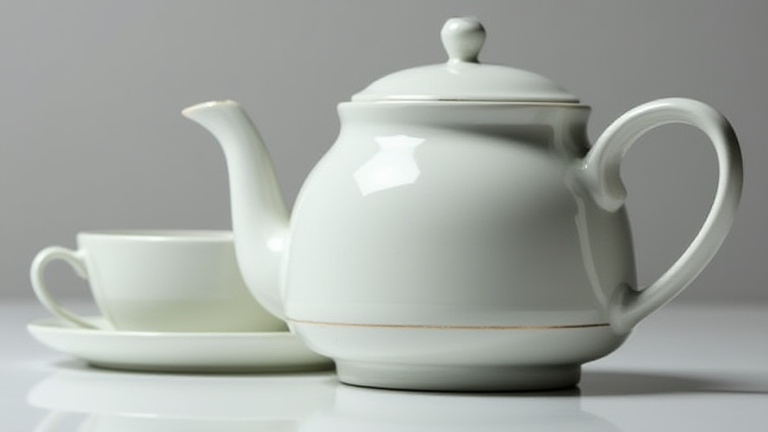
TL;DR: Choose a porcelain teapot with a snug-fitting lid, a comfortable handle, and a fine spout that pours without dripping; care for it by hand-washing with mild soap and avoiding thermal shock. Prioritize high-fired porcelain (like bone china) for durability and a non-porous glaze that won’t absorb flavors.
How to Choose Your Porcelain Teapot
Step 1: Check the glaze and weight. Pick up the pot—quality porcelain feels smooth, slightly heavy, and has a glassy, even glaze with no pinholes or crazing (tiny cracks). Run your finger inside; it should be silky, not rough, to prevent staining and flavor buildup.
Step 2: Test the lid and spout. The lid should fit snugly but not stick, with a small vent hole for steam. Turn the pot upside down; the lid should stay put. For the spout, pour water—a good spout drips less and stops cleanly. Avoid wide, stubby spouts that dribble.
Step 3: Match capacity to use. For solo tea, choose a 12–16 oz pot. For a tea set (pot + cups), ensure the pot pours exactly 4–6 cupfuls (about 6 oz each) to avoid over-brewing. Also, check the handle: it should be large enough for your fingers and set back from the body to prevent burns.
How to Care for Your Porcelain Set
Step 4: Hand-wash only. Never put porcelain in the dishwasher—high heat and detergents can erode the glaze. Use warm water, a soft sponge, and a drop of mild dish soap. Rinse thoroughly and dry immediately with a lint-free cloth to prevent water spots.
Step 5: Avoid thermal shock. Porcelain cracks if heated or cooled too fast. Never pour boiling water into a cold pot. Instead, pre-warm the pot with warm (not boiling) water, swirl, and discard. Similarly, let the pot cool to room temperature before washing with cold water.
Step 6: Remove stains gently. For tea stains, fill the pot with warm water and add 1 teaspoon of baking soda. Let sit for 15 minutes, then scrub with a soft brush. Avoid abrasive pads or bleach, which can scratch the glaze. For stubborn odors, brew a weak solution of white vinegar and water, rinse, and air dry upside down.
FAQ
Q: Can I use my porcelain teapot on a stovetop or in a microwave?
A: No, unless it is explicitly marked as flameproof or microwave-safe. Most porcelain teapots are for brewing and serving only; direct heat can crack the glaze or body.
Q: What’s the difference between porcelain and bone china teapots?
A: Bone china contains bone ash (at least 25%), making it thinner, lighter, and more translucent, while porcelain is denser and more chip-resistant. Both are non-porous, but bone china is more delicate—choose porcelain for daily use, bone china for formal sets.
Q: How do I know if my porcelain teapot is food-safe?
A: Look for a “food-safe” or “lead-free” label on the box or base. High-fired porcelain (fired above 1,200°C) is naturally non-toxic. If you buy vintage or unmarked pieces, test with a home lead-test kit before use, especially on colored glazes.
Leave a Reply