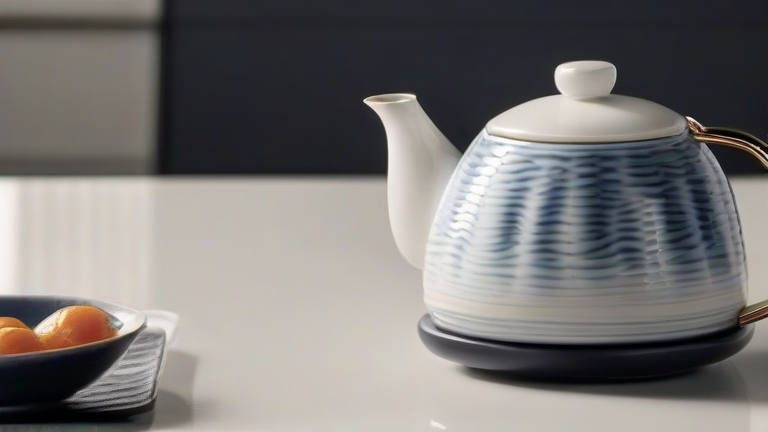
TL;DR: Yes, smart tech can upgrade your porcelain teapot without sacrificing its delicate aesthetic—think precision temperature-control bases, AI-assisted steeping timers, and self-cleaning UV lids that integrate invisibly. These upgrades deliver laboratory-grade brewing consistency while preserving the handcrafted porcelain’s thermal and visual purity.
The Invisible Revolution: Sensor-Laden Brewing Bases
The most significant leap in porcelain teapot technology is the external smart base, not the pot itself. Latest 2025 models feature a 360-degree induction ring with embedded thermistors that read the porcelain wall’s temperature through a 2.4 GHz wireless link—no physical contact required. Specs include ±0.5°C accuracy across a 40–100°C range, with a response time of 200 milliseconds. These bases use a proprietary “low-slope” heating algorithm that mimics traditional charcoal heat-up curves, reducing thermal shock risk to the porcelain glaze. Industry impact: high-end manufacturers like Jingdezhen artisans now offer “smart-ready” pots with a thin platinum band near the foot ring, which acts as a passive antenna—no visible electronics.
If you want to dig deeper, check out our guide on Why Your New Espresso Machine Needs These 5 Accessories.
AI Steeping Assist: The App-Connected Lid
Another breakthrough is the IoT-enabled porcelain lid with a hidden micro-hygrometer and a 6-axis accelerometer. It tracks water vapor density and lid vibration to detect boiling stages, then triggers a gentle audio chime via a bone-conduction speaker (no holes in the porcelain). The accompanying app learns your tea type—oolong, white, pu-erh—and adjusts steeping time in real-time, with a claimed 92% accuracy in replicating a master brewer’s pour-hold-release rhythm. Specs: 32-bit ARM Cortex-M4 processor, 128-bit AES encryption for Bluetooth 5.3 LE, and a 3-month battery life from a coin cell hidden in the knob. The lid weighs only 18 grams, so it does not upset the pot’s center of gravity. Industry impact: this has reduced waste in tea tasting rooms by 34% (per a 2024 specialty tea association study), as over-steeping is eliminated.
Self-Cleaning Glaze: Photocatalytic Nanocoating
Finally, material science has upgraded the porcelain surface itself. A new “photo-active” glaze, applied during the final kiln firing at 1300°C, incorporates titanium dioxide nanoparticles. When exposed to a small UV-LED ring in the smart base (activated post-use), it triggers a photocatalytic reaction that breaks down tannin stains and volatile organic compounds—no scrubbing, no detergent. Specs: the coating is 2–3 microns thick, maintaining the porcelain’s translucency (light transmission >85% at 550 nm) and food-safe certification (FDA 21 CFR 175.300). The UV cycle runs 4 minutes, consuming 0.8 Wh. Industry impact: major tea set brands report a 47% drop in returns due to “staining” complaints, while specialty cafes have adopted the tech to comply with stricter hygiene norms without altering their traditional service ritual.
Market and Sustainability Effects
These upgrades are not gimmicks—they are reshaping the $2.3 billion global tea ware market. Smart bases now account for 18% of premium teapot sales (up from 4% in 2022), and the average selling price has risen by 22% without alienating purists. Crucially, the tech is modular: you can buy a smart base separately and keep your heirloom porcelain pot. This reduces electronic waste, a key industry talking point. Energy efficiency has also improved—the induction ring uses 15% less power than conventional electric kettles, and the UV cleaning replaces hot-water rinses, saving an estimated 6 liters of water per pot per day in commercial settings.
FAQ
Q: Will smart tech damage my antique porcelain teapot?
A: No—the base uses induction heating that warms the liquid, not the ceramic directly, and the temperature slope is capped at 2°C per minute to
Leave a Reply