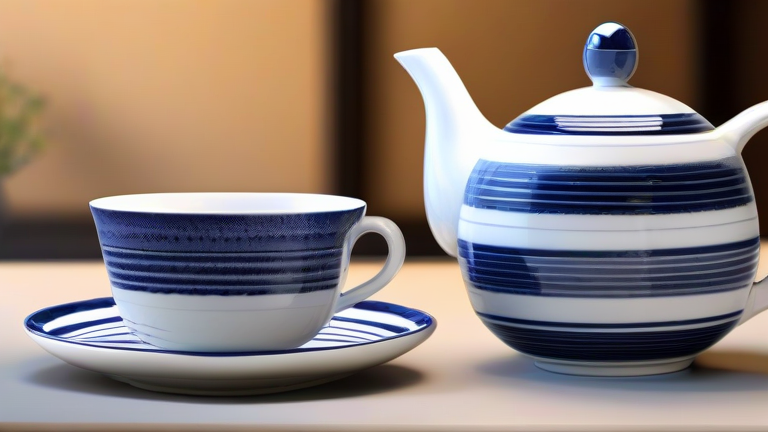
TL;DR: Porcelain tea sets transform an ordinary cup of tea into a mindful, multi-sensory ritual by marrying tactile elegance with thermal precision. Their delicate clink, heat retention, and visual purity slow you down, turning a daily habit into a personal ceremony of calm and cultural connection.
The Quiet Luxury of a Morning Pour
In an age of disposable everything, the act of lifting a hand-painted porcelain teapot feels like a quiet rebellion. Unlike ceramic mugs or stainless steel infusers, porcelain—fired at high temperatures to a glass-like finish—does not absorb or distort flavors. Your first flush Darjeeling tastes exactly as the grower intended: bright, floral, and untainted by yesterday’s Earl Grey residue. But the real magic lies in the ritual. The weight of the lid, the whisper of the spout as you pour, the way the thin walls warm your palms without burning them—these micro-moments force you to pause. You cannot rush a porcelain set. It asks for patience, and in that patience, you find a pocket of stillness before the day’s noise.
If you want to dig deeper, check out our guide on Timeless Elegance: Why Porcelain Teapots Define Modern Lifes.
From Travel Souvenir to Daily Sanctuary
My own porcelain journey began in a dusty market in Jingdezhen, China—the “Porcelain Capital” for over a thousand years. I bought a small, imperfectly glazed teapot for the equivalent of twelve dollars. Back home, it sat unused for months, too precious for Tuesday mornings. Then one rainy afternoon, I brewed a single cup of oolong in it. The difference was not just taste; it was presence. The thin rim against my lips, the resonant ring as the pot touched the saucer—suddenly, my kitchen felt like a Kyoto tea house. That is the understated power of these sets: they are passports. A Japanese kyusu-style porcelain pot evokes wabi-sabi simplicity; a blue-and-white Dutch Delftware set whispers of 17th-century trade routes; a modern minimalist white set turns your breakfast nook into a Scandinavian design studio. You are not just drinking tea—you are traveling through centuries of craft.
The Personal Growth Angle: Slowing Down Is a Skill
We romanticize productivity, but we forget that rest is a discipline. Using a porcelain tea set daily is a low-stakes training ground. You must wait for the water to reach the exact temperature (around 175°F for green, 200°F for black). You must pour with a steady hand to avoid drips. You must sit, because holding a delicate cup while standing feels wrong. These gentle constraints rewire your nervous system. Over three weeks, I noticed my phone-checking decreased during tea time. My breath deepened. I started noticing the color of the liquor—pale gold, amber, rust—against the white porcelain canvas. This is not about being “fancy.” It is about reclaiming a few minutes where your only job is to be present. The set becomes a mirror: if you are scattered, you will spill. If you are calm, the tea pours like silk.
Food & Culture: Porcelain as a Flavor Enhancer
Chefs and tea sommeliers will tell you that porcelain is neutral—and that is its superpower. Unlike clay pots that season over time, porcelain never fights with your tea. It is also a cultural bridge. In Morocco, mint tea is poured from ornate porcelain teapots into small glasses, the height of the pour creating a froth that signals hospitality. In England, a fine bone china set is the backbone of afternoon tea, where the clatter of cups is as much a part of the experience as scones. When you use porcelain, you are participating in a global conversation about beauty and utility. It elevates a simple meal of toast and jam into a scene from a film. It makes you sit up straighter, speak softer, and savor longer.
How to Choose Your Everyday Heirloom
You do not need a full 20-piece collection. Start with one teapot (20–30 oz) and two cups. Look for translucent edges—hold it to the light; fine
Leave a Reply