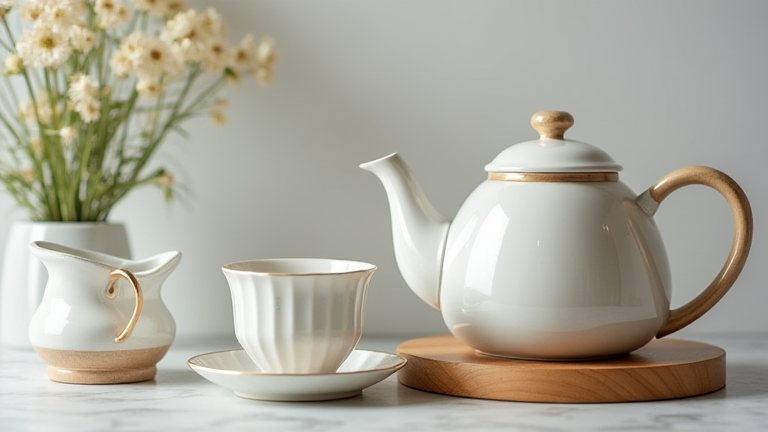
TL;DR: Elevating your tea ritual isn’t about buying more—it’s about choosing a porcelain teapot that turns a daily pause into a sensory ceremony. A well-crafted set adds tactile warmth, visual calm, and a slower, more intentional rhythm to your afternoon.
The Quiet Luxury of Porcelain
In a world of hurried coffee cups and disposable infusers, the porcelain teapot stands as a quiet rebellion. Its thin, vitrified walls conduct heat evenly, releasing the tea’s aromatic oils without the metallic tang of steel or the porous absorption of clay. When you lift a porcelain lid, you’re not just steeping leaves—you’re engaging in a centuries-old dialogue between fire, clay, and human patience. The material’s glaze, often milky white or celadon, reveals the liquor’s true color, turning each pour into a small visual meditation.
If you want to dig deeper, check out our guide on Elevate Your Home: Stylish Porcelain Teapots for Modern Livi.
Travel, Food, and the Art of Slowing Down
Think of your tea set as a passport to another pace. A Japanese-inspired kyusu-style porcelain pot with a side handle invites you to cradle it with both palms, feeling the warmth before the first sip. Pair it with a matching tray and two small cups, and your kitchen table becomes a Kyoto tea house. For food lovers, porcelain’s neutrality complements everything from smoky Lapsang Souchong to delicate jasmine pearls—no flavor is masked, only enhanced. And for the traveler, a compact two-cup set packs into a linen wrap, turning a hotel balcony or a mountain picnic into a private ritual. The act of pouring, watching steam curl, and listening to the ceramic clink against a saucer is a form of mindfulness that no app can replicate.
Choosing Your Set: Form Meets Function
When selecting a porcelain set, look for a pot with a well-balanced spout that drips cleanly—a sign of precise craftsmanship. A built-in stainless steel mesh infuser is practical, but a traditional unglazed interior (like some Yixing-style porcelain) lets the tea breathe. For personal growth, choose a set with a design that calms you: a hand-painted blue willow pattern for nostalgia, or a minimalist matte black for modern focus. Don’t overlook the cups—their rim thickness affects how the tea touches your lips. A thin, flared rim delivers a more delicate sip. Finally, invest in a warming plate or a small cotton cozy; porcelain retains heat, but a cozy extends your ritual’s unhurried luxury.
FAQ
Q: What makes porcelain better than glass or ceramic for tea?
A: Porcelain is fired at higher temperatures, making it denser and less porous than earthenware, so it won’t absorb flavors between brews. It also holds heat longer than glass while being lighter and more chip-resistant than many ceramics, giving you a clean, neutral canvas for any tea type.
Q: How do I clean a porcelain teapot without damaging the glaze?
A: Rinse immediately with warm water and a soft sponge—never abrasive scrubbers. For stubborn stains, use a paste of baking soda and water, then rinse thoroughly. Avoid soap, as it can leave a residue that alters future tea flavor; just hot water and gentle friction are enough.
Q: Can I use a porcelain teapot on a stove or in a microwave?
A: Only if the set is explicitly labeled as “flameproof” or “microwave-safe.” Most decorative porcelain is not designed for direct heat—thermal shock can crack the glaze. Instead, warm the pot with hot water before steeping, and use a kettle for boiling, then pour into the pot.
Leave a Reply