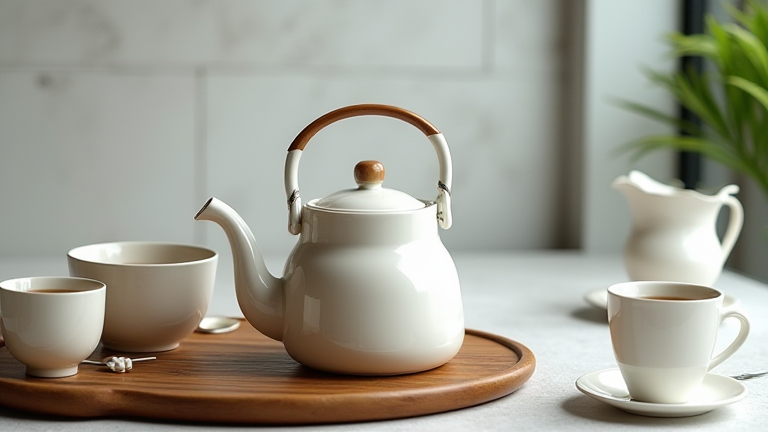
TL;DR: The best porcelain teapots and sets balance heat retention with delicate flavor expression, making them ideal for green, white, and oolong teas. Prioritize a fine, non-porous body, a well-fitting lid, and a comfortable spout—then let the ritual of slow pouring become your daily meditation.
The Art of Slow: Why Porcelain, Why Now
In a world of instant gratification, the tea ritual is a quiet rebellion. Porcelain—fired at high temperatures to a glassy, vitrified finish—doesn’t absorb flavors or odors the way clay does. This means your jasmine silver needle won’t taste like yesterday’s smoky lapsang souchong. For the traveler or the homebound dreamer, a porcelain set is a portable piece of stillness. It invites you to watch the leaves unfurl, to feel the warmth seep through the thin walls, and to listen to the gentle clink of the lid. This isn’t just brewing; it’s a pause button for your nervous system.
If you want to dig deeper, check out our guide on 7 Shopify Email Automation Strategies to Boost Ecommerce Rev.
What to Look For: The Anatomy of a Fine Teapot
Not all porcelain is created equal. The finest sets come from Jingdezhen, China—the historic “Porcelain Capital”—or from Japanese Arita and European houses like Herend or Royal Copenhagen. When choosing, run your finger over the rim: it should be smooth, not sharp. The spout should pour without dripping; a good test is to tilt it slowly and check for a clean cut-off. The lid must fit snugly but not stick, and the handle should be ergonomic—able to cradle your fingers without burning. For solo sessions, a 200–300ml pot is ideal; for gatherings, look for a 500ml pot with matching cups that have a slight curve to enhance aroma.
Three Sets That Transform the Everyday
First, consider the classic Gaiwan-style travel set—a lidded bowl and cup that doubles as a sieve. It’s minimalist, perfect for a desk or a mountain trail. Second, the Yixing-style porcelain hybrid—porcelain body with a bamboo-wrapped handle—offers grip and a rustic aesthetic without the flavor absorption of clay. Third, invest in a Japanese “Hakuji” (white porcelain) set with a wide, shallow pot. Its shape maximizes leaf expansion for delicate green teas, and the milky white glaze makes the liquor’s color the star. Each set, under $80, delivers a five-star sensory experience without the five-star price.
From Ritual to Growth: The Personal Angle
Adopting a porcelain tea practice is a form of self-care that echoes into your daily decisions. The act of boiling water to exactly 175°F for green tea, warming the pot, and pouring in a slow, circular motion teaches patience. It’s a micro-course in mindfulness: you can’t rush a good brew, just as you can’t rush clarity. Over weeks, you’ll notice your breathing slows, your phone feels heavier, and your gratitude for small textures deepens. This is not about perfection—it’s about presence. Whether you’re in a Tokyo ryokan or a Brooklyn studio, your porcelain pot becomes a home altar.
Care & Longevity: A Love Letter to Your Set
Never put fine porcelain in a dishwasher; the high heat and detergents will dull the glaze. Instead, rinse immediately with warm water and a soft sponge. For stubborn stains, use a paste of baking soda and water—never abrasive scrubbers. Store with the lid slightly ajar to avoid a musty smell. If you travel, wrap each piece in a linen cloth, not bubble wrap; the natural fiber breathes and prevents micro-scratches. With this care, your set will outlive trends and remain a heirloom for your future tea-drinking self.
FAQ
Q: Is porcelain better than clay for all tea types?
A: No.
Leave a Reply