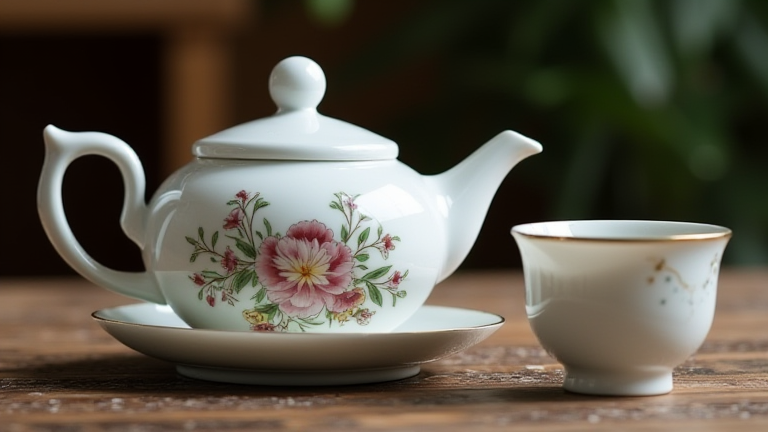
TL;DR: Handcrafted porcelain teapots offer superior heat retention, non-porous surfaces that preserve delicate tea flavors, and timeless artistry unmatched by mass-produced ceramic or cast-iron alternatives. For the discerning tea drinker, a quality porcelain set is the single best investment in both daily brewing ritual and long-term durability.
Why Porcelain Reigns Supreme in Tea Brewing
Unlike clay or cast iron, high-fired porcelain (fired at 1,300°C+) creates a vitrified, glass-like body that does not absorb tannins or odors. This means your first-flush Darjeeling will never taste like last week’s smoky Lapsang. Handcrafted sets, often thrown on a wheel and glazed with lead-free finishes, also regulate temperature more evenly than thin-walled bone china, reducing the risk of scalding bitter extraction. The result: a cleaner, sweeter cup with every steeping.
If you want to dig deeper, check out our guide on Porcelain Teapot Guide: How to Choose, Use & Care for Your S.
Feature Highlights: What to Look For
When evaluating a handcrafted porcelain teapot, prioritize three features. First, a finely tapered spout—preferably with an interior strainer—ensures a drip-free pour and filters fine leaf particles without metallic mesh. Second, a snug-fitting, knobbed lid with a vent hole prevents vacuum lock and steam burns. Third, a wide, shallow body (rather than tall) exposes more leaf surface to water, maximizing aroma. Many artisan sets also include matching cups and a warming tray, but the teapot itself should weigh under 900 grams for effortless handling.
Comparisons: Porcelain vs. Yixing Clay vs. Glass
Yixing clay is porous and seasoned for a single tea type—ideal for oolong connoisseurs but inflexible for variety. Glass offers visual brewing pleasure but loses heat 30% faster, requiring constant reheating. Porcelain, by contrast, is a neutral, thermal-efficient chameleon: it works equally well for green, white, black, or herbal infusions. Compared to stoneware, porcelain is lighter, more chip-resistant (when high-fired), and its glossy glaze is easier to clean without soap residue. The only downside is premium cost—expect $60–$150 for a genuine handcrafted piece versus $20 for machine-made imports.
Care & Longevity: Make Your Set Last Decades
Handwash with warm water and mild detergent; avoid abrasive pads. Never place porcelain directly on a stove or in a microwave with metallic accents. To remove tea stains, soak with baking soda paste—never bleach. With proper handling, a high-fired porcelain teapot will outlive you, developing a gentle patina only on the exterior, never affecting flavor.
Call-to-Action
Ready to elevate your daily ritual? Browse our curated collection of small-batch, artisan porcelain teapots—each signed by the maker and shipped with a 90-day no-chip guarantee. Limited stock for each glaze (celadon, cobalt, and pearl white). Click “Shop Now” to find your perfect brewing companion before the next kiln firing sells out.
FAQ
Q: Can I use a handcrafted porcelain teapot on a gas stove?
A: No—porcelain is not flame-safe. Use an external heat source like a candle warmer or electric kettle to keep water hot; the teapot is for brewing and serving only.
Q: Does porcelain affect the taste of delicate white teas?
A: No. Its non-porous glaze adds zero mineral or metallic notes, making it the most neutral vessel for white and silver needle teas, preserving their floral sweetness.
Q: How do I know if a porcelain teapot is truly handcrafted versus slip-cast?
A: Look for slight asymmetry in the spout or handle, visible wheel-throw ridges on the interior base, and an irregular glaze drip near the foot. Handcrafted pieces also have a heavier weight and a maker’s stamp or signature on the underside.
Leave a Reply