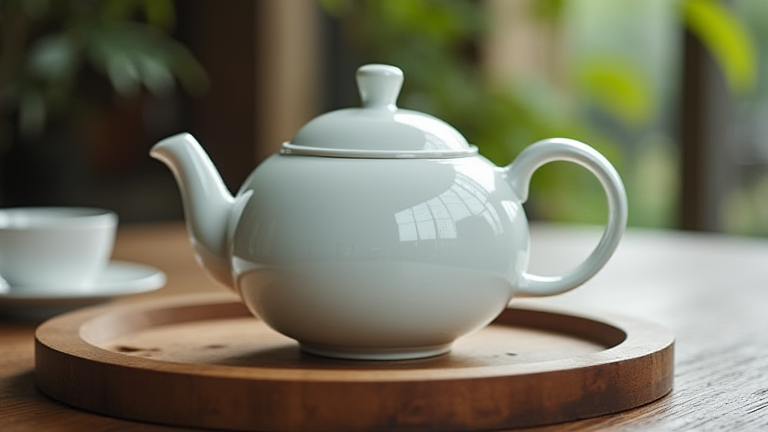
TL;DR: To use a porcelain teapot, warm it with hot water, add loose leaf tea, pour in water just off the boil, and steep for 3–5 minutes. To care for it, rinse with warm water after each use, avoid soap, and dry thoroughly before storing to prevent cracking and stains.
Step 1: Prepare Your Porcelain Teapot
Before brewing, always preheat the pot. Porcelain is sensitive to sudden temperature changes, which can cause hairline cracks. Fill the teapot one-third full with hot tap water (not boiling) and swirl it gently. Discard the water, then add your loose leaf tea—typically 1 teaspoon per 8 ounces plus one extra “for the pot.” This step also ensures your tea stays at the correct temperature during steeping.
If you want to dig deeper, check out our guide on Handcrafted Porcelain Teapots: The Ultimate Guide to Tea Set.
Step 2: Brew the Perfect Cup
Bring fresh, filtered water to a boil, then let it rest for 30–60 seconds. For delicate green or white teas, use water at 170–180°F; for black or oolong teas, use 200–212°F. Pour the water over the leaves in your porcelain teapot, leaving a half-inch of headspace to avoid overflow. Cover with the lid and steep according to tea type: 2–3 minutes for greens, 3–4 for oolongs, and 4–5 for black teas. Porcelain doesn’t absorb flavors, so you can switch tea types without residual tastes.
Step 3: Pour and Serve Correctly
Hold the teapot by the handle, not the lid knob, and pour slowly in a steady stream. Use a tea strainer if your pot lacks a built-in filter. Pour all the tea out after steeping—do not let leaves sit in the water, as they will over-brew and turn bitter. For multiple cups, alternate pours between cups to keep strength even.
Step 4: Clean Without Damaging the Glaze
After each use, rinse your porcelain teapot immediately with warm water. Do not use dish soap—it can strip the glaze and absorb into the porous unglazed interior (if present). For stubborn stains, add a teaspoon of baking soda with warm water, swirl, and rinse. Never scrub with metal brushes or abrasive pads; use a soft sponge or bamboo brush. Avoid putting porcelain in the dishwasher, as high heat and detergents cause crazing (fine cracks) over time.
Step 5: Dry and Store Properly
After rinsing, turn the teapot upside down on a lint-free towel to air dry completely. Do not store with the lid sealed on while damp—moisture trapped inside encourages mold. Once fully dry, place the lid slightly ajar or store separately. Keep your porcelain tea set on a stable shelf away from direct sunlight, which can fade decorative patterns. If stacking, place a soft cloth between the pot and cups to prevent chipping.
Pro Tips for Longevity
Never heat a porcelain teapot directly on a stove or in a microwave unless it is explicitly labeled “microwave-safe.” If your tea set has gold or metallic trim, hand wash only and avoid acidic teas (like lemon) that can dull the finish. For everyday use, rotate between two teapots so each gets proper drying time. Finally, if you notice a crack, stop using the pot immediately—porcelain can shatter when heated with a hidden fracture.
FAQ
Q: Can I use soap to clean my porcelain teapot?
A: No, avoid dish soap. It can leave a residue that alters tea flavor and may damage the glaze over time. Use warm water and a soft sponge, or a baking soda paste for stubborn stains.
Q: Why did my porcelain teapot crack when I poured boiling water in it?
A: You likely skipped preheating. Cold porcelain expands rapidly when hit with boiling water, causing thermal shock cracks. Always warm the pot
Leave a Reply