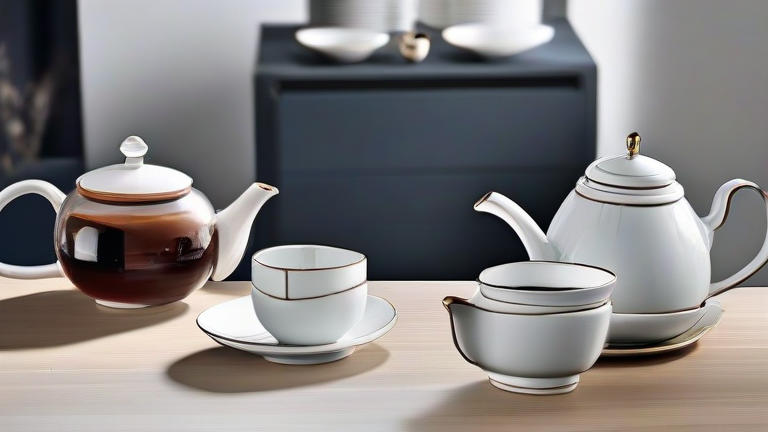
TL;DR: Choose a porcelain teapot with a snug-fitting lid, a comfortable handle, and a fine, unglazed rim for best flavor; care for it by hand-washing with mild soap, avoiding thermal shock, and storing it with the lid slightly ajar.
Step 1: Choose the Right Porcelain for Your Brewing Style
Not all porcelain is equal. For daily use, select a “hard-paste” porcelain (fired at high temperatures) — it’s denser, less porous, and resists staining. If you brew delicate green or white teas, opt for a thin-walled pot (2–3 mm) that cools quickly, preventing bitterness. For black or oolong teas, choose a thicker-walled pot (4–5 mm) that retains heat. Check the bottom: a fully glazed foot (no rough exposed clay) indicates higher quality and prevents scratches on your table.
If you want to dig deeper, check out our guide on Porcelain Teapots & Sets: Find the Perfect Tea Collection.
Step 2: Assess the Spout, Lid, and Handle Fit
Hold the pot at a 45-degree angle. The spout tip should be slightly lower than the lid rim to prevent drips. Test the lid: it should sit flush without wobbling, and the knob should be large enough for a secure grip. For the handle, mimic your pouring motion — your index and middle fingers should slot comfortably under it, with your thumb on top. Avoid handles that are too close to the body (burn risk) or too far (unbalanced pour). Pour water into the pot, cover with the lid, and tilt: no leaks from the seam = good seal.
Step 3: Prepare Your Teapot Before First Use
Porcelain does not need seasoning (unlike clay), but it must be cleaned of manufacturing dust. Rinse the pot and lid under warm water. Then, fill it halfway with boiling water, swirl for 30 seconds, and discard. Repeat once more. This “pre-warming” step is critical: never place a cold porcelain pot directly under boiling water — the thermal shock can crack the glaze. Always warm the pot with a small amount of hot water first, then discard before adding tea leaves.
Step 4: Brew Properly to Protect the Glaze
Use loose-leaf tea (1 teaspoon per 6 oz water) in a mesh infuser or directly in the pot. Never use metal utensils inside the pot — they can scratch the glaze. Pour hot water (temperature depends on tea type: 160°F for green, 200°F for black) down the side, not directly onto the leaves, to reduce agitation. After brewing, remove the leaves immediately. Do not let tea sit in the pot for more than 10 minutes; tannins will etch the porcelain’s surface over time, leaving permanent brown rings.
Step 5: Clean and Dry Without Damage
Rinse the pot with warm water immediately after use. For stubborn stains, use a soft sponge and a paste of baking soda and water — never abrasive scrubbers. Avoid dishwashers: detergent salts and high heat can dull the glaze. To dry, towel-dry the outside and leave the lid off for 24 hours to allow the interior to air out completely. This prevents musty odors and mold growth in the spout. Once a month, sterilize by filling with a 50/50 white vinegar and water solution, letting it sit for 1 hour, then rinsing thoroughly.
Step 6: Store Correctly to Prevent Chips
Store your teapot on a stable shelf away from the edge. If stacking with other teaware, place a soft cloth or felt between the pot and cups. Never stack another pot on top of the lid — the knob is the most fragile point. Keep the lid slightly ajar (use a folded paper towel as a wedge) to let moisture escape. If you must store it closed, place a silica gel packet inside to absorb residual humidity.
FAQ
Q: Can I use my porcelain teapot on a stovetop or in a microwave?<
Leave a Reply